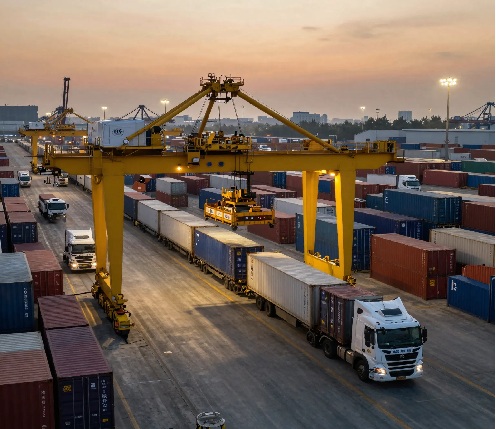
The global transportation and logistics (T&L) sector entered 2025 amid cautious optimism. Following a period of volatility in previous years—driven by supply chain disruptions, inflationary pressures, and geopolitical uncertainty—the sector demonstrated resilience and strategic recalibration. Investment activity, particularly in M&A and private equity, remained robust, though selective, as buyers and sponsors focused on high-quality, technology-enabled, and sustainable assets. 2025 marked a year of strategic consolidation, digital transformation, and infrastructure investment, setting the stage for an active but nuanced 2026.
2025 Review: M&A and Investment Activity
In 2025, the T&L sector recorded approximately 1,100–1,200 global M&A transactions, down roughly 20–22% from 2024, reflecting a moderation from peak volumes. Despite this overall decline, deal activity demonstrated sequential growth over multiple quarters, highlighting steady momentum amid tighter financing conditions. Strategic buyers dominated the market, accounting for 85–90% of deals, driven by consolidation, network expansion, and capability acquisition. Private equity participation represented 35–40% of transactions, concentrated on high-growth or infrastructure-oriented logistics platforms. Valuations diverged sharply: strategic deals consistently commanded EV/EBITDA multiples of 12–13x, particularly for technology-enabled or sustainable assets, while PE-backed deals, typically targeting cyclical or capital-intensive carriers, averaged 5–6x EBITDA.
Regionally, Europe led M&A activity, accounting for 40–45% of transactions at its peak, driven by fragmented markets and regulatory pressures that incentivized consolidation. North America followed closely, with significant activity in trucking, third-party logistics, and last-mile delivery, while Asia-Pacific investment remained selective, emphasizing ports, terminals, and digital logistics platforms.
Private Equity and Strategic Capital Deployment
In 2025, private equity adopted a disciplined and selective investment approach in the transportation and logistics sector, prioritizing specialty logistics, platform plays, and transport infrastructure while largely avoiding highly cyclical, asset-heavy carriers. For instance, in the oil and gas transportation segment, PE deployed over $4 billion across more than a dozen transactions, targeting both consolidation opportunities and predictable, stable cash flows. Infrastructure assets—including terminals, regional distribution hubs, and warehouse networks—remained attractive to investors seeking long-term, yield-oriented returns.
Technology-enabled logistics platforms were especially compelling, with SaaS solutions, AI-powered freight optimization, and warehouse automation commanding premium valuations due to their scalability, operational efficiency, and margin resilience. This trend reflects a broader shift in investor preference from traditional, capital-intensive carriers to asset-light, tech-enabled platforms that offer predictable growth and strong operational leverage.
Geopolitical and Macro Drivers
Global geopolitical dynamics played a critical role in shaping the transportation and logistics sector in 2025 and are expected to continue influencing strategic decisions in 2026. Trade tensions between major economies, the imposition of sanctions, and regional conflicts prompted companies to reassess and diversify their supply chains, accelerating investments in nearshoring, regional hubs, and cross-border logistics corridors. Energy price volatility, often linked to geopolitical instability, affected fleet operations and capital allocation decisions, particularly for fuel-intensive transport segments, creating an additional layer of operational and financial risk. These macro pressures also drove consolidation in Europe and North America, as firms sought scale, network resilience, and operational efficiency to mitigate disruption risks. Furthermore, uncertainty in global trade reinforced the value of technology-enabled, asset-light, and sustainable logistics platforms, which can maintain performance under volatile conditions while supporting long-term growth.
Looking into 2026, geopolitical and macroeconomic factors are likely to remain a defining influence on sector strategy and investment. Companies are expected to prioritize supply-chain resilience, invest in regional and domestic infrastructure, and diversify sourcing and distribution networks to reduce exposure to trade disputes and regulatory shifts. Energy market fluctuations and the ongoing transition to sustainable transport solutions, such as electrified fleets and low-carbon warehouses, will continue to guide capital deployment decisions. For investors and private equity sponsors, this environment will emphasize the importance of selective, risk-aware acquisitions that combine technology adoption, operational flexibility, and ESG-compliant practices. Overall, 2026 is likely to see logistics players and investors actively navigating geopolitical risk while leveraging consolidation, technology, and sustainability to secure predictable, long-term returns.
2026 Outlook: Transportation & Logistics Investment Themes
In 2026, the transportation and logistics sector is expected to remain active but selective, driven by growth, technology, and disciplined capital deployment.
Strategic Consolidation: Fragmented markets, including last-mile, cold-chain, and specialized freight, will attract buyers seeking scale, network synergies, and margin expansion.
Technology-Enabled Growth: Logistics software, AI freight platforms, and warehouse automation will continue to command premium multiples and attract both strategic and PE investors.
Sustainability Focus: Electrification, decarbonization, and ESG-aligned infrastructure will increasingly influence valuations and deal decisions.
Regional Hubs & Infrastructure: Nearshoring, cross-border hubs, and transport infrastructure will see continued investment as firms enhance supply-chain resilience.
Private Equity Selectivity: PE sponsors will target high-margin, tech-enabled, and predictable cash-flow platforms, avoiding cyclical, asset-heavy carriers.
Geopolitical Sensitivity: Trade tensions, sanctions, and energy volatility will shape transaction timing and strategic prioritization.
The transportation and logistics sector demonstrated resilience, strategic focus, and adaptability in 2025, setting the foundation for a selective but opportunity-rich 2026. M&A activity and investment are increasingly quality-driven, favoring tech-enabled, ESG-compliant, and infrastructure-oriented platforms. Geopolitical dynamics, macroeconomic pressures, and operational challenges continue to shape strategic priorities, reinforcing the importance of resilient, diversified, and technology-enabled assets. For investors, private equity sponsors, and corporate strategists, the sector offers a compelling landscape of opportunities, combining long-term structural growth with near-term strategic acquisitions and platform-building potential.