Latin America has long been a region of contrasts -670 million or so inhabitants, immense natural wealth, dynamic entrepreneurial energy, and historically complex political and economic frameworks. In recent years, however, certain countries in the region have been undergoing a series of meaningful transformations, including the introduction of market friendly policies, regulatory reforms, and gradual market liberalization across sectors previously constrained by policy. Notwithstanding a deterioration in global markets, these shifts are reshaping investor perception and generating renewed momentum across financial markets, particularly in direct investments or mergers and acquisitions.
As global investors and corporate strategists reassess capital allocation in an increasingly fragmented geopolitical environment, understanding the interaction between political dynamics, macroeconomic trends, and capital flows has become essential to navigating Latin America’s evolving investment landscape.
Geopolitical Dynamics and the Repricing of Global Markets
Geopolitical dynamics across Latin America are becoming an increasingly relevant factor for global financial markets. This evolution is reshaping how investors, energy companies, and dealmakers assess risk, opportunity, and long-term access to strategic resources. Political considerations are now more systematically embedded into asset valuations, with markets increasingly rewarding policy clarity, regulatory consistency, and institutional strengthening across sovereign, infrastructure, and resource-linked assets. At the same time, challenges such as political volatility, regulatory fragmentation, foreign exchange risk, and integration complexity are no longer region-specific but increasingly global in nature. As a result, global equities and commodities are placing less emphasis on near-term supply metrics and greater weight on expectations around future access, stability, and regulatory continuity. In this context, Latin America’s role as a long-term provider of strategic resources creates a constructive backdrop for countries that demonstrate political durability, institutional credibility, and reform momentum, supporting sustained capital deployment over time.
Implications for the Global Energy Sector
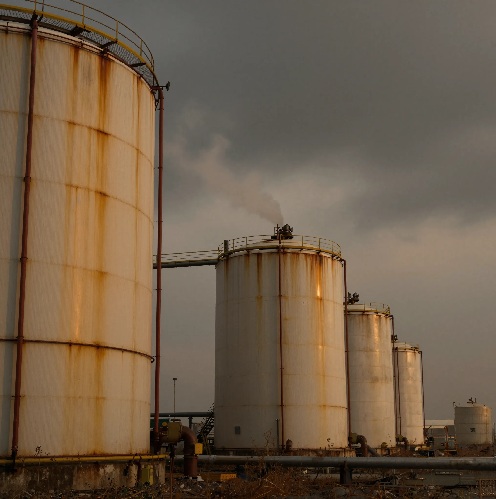
In the global energy sector, the implications of these shifts are expected to be structural rather than cyclical. Latin America will continue to stand out as one of the world’s most resource-rich regions, with future production growth increasingly supported by political alignment, regulatory clarity, and renewed investment in infrastructure. Energy markets are likely to price in greater optionality around the reactivation of large reserve bases and their integration into global supply chains. While near-term volumes are unlikely to shift global supply-demand balances, expectations of future access will influence refinery planning, long-term offtake agreements, and cross-regional trade flows. Energy companies, service providers, and commodity traders are expected to proactively position for potential re-entry and expansion scenarios.
Capital Reallocation and Global Energy Security Trends
Evolving geopolitical dynamics in Latin America are set to play a meaningful role in global capital reallocation within the energy system. As international producers refine their investment frameworks, the region is well positioned to attract capital toward basins and projects that combine political stability, improving governance, and competitive economics. At the same time, energy-importing nations are deepening diversification strategies, with investment expanding across liquefied natural gas, renewables, grid modernization, and energy storage. In this environment, the energy transition is increasingly viewed not only as a climate imperative but also as a geopolitical hedge, with capital favoring energy systems that combine resource depth with institutional resilience. Over the coming decade, energy security is expected to become a core financial variable rather than a secondary policy consideration.
How Global M&A Strategy Is Evolving
The impact on global mergers and acquisitions is becoming increasingly pronounced. Cross-border deal activity involving energy, infrastructure, and natural resource assets are now filtered through more rigorous political-risk assessments. Strategic buyers are prioritizing jurisdictions that offer regulatory predictability, enforceable contracts, and stable fiscal regimes. In this context, most countries in Latin America have demonstrated notable resilience. As volatility becomes a more global feature, investors are applying disciplined, risk-adjusted frameworks to the region, driving increased capital deployment in strategic sectors. During the first nine months of 2025, total M&A, private equity, venture capital, and asset acquisition value in Latin America reached US$78.1 billion, representing a 24% year-over-year increase. Activity was particularly strong across energy, mining, technology, and real estate, supported by robust investor participation from the United States, the United Kingdom, and Spain. This performance underscores sustained reinvestment and a clear long-term investment orientation.
Latin America is undergoing a gradual process of political stabilization, accompanied by significant economic shifts across the region. In Argentina, the government sworn in December 2023 moved swiftly to correct major fiscal, monetary, and foreign exchange imbalances, while introducing market-friendly reforms that restored credibility and helped stabilize the economy, laying the groundwork for sustainable, long-term growth. Similarly, in Chile, the recently elected president has identified economic reactivation and the promotion of investment projects as core priorities, aiming to strengthen growth prospects and attract long-term capital to the country. El Salvador, Bolivia, Ecuador, Panama and Peru have also experienced political shifts that have been positively viewed by the market.
The Road Ahead
Looking beyond 2026, geopolitical dynamics in Latin America are expected to play an increasingly important role in global capital allocation. Investors are likely to incorporate political and regulatory factors more systematically into valuation and financing decisions, favoring jurisdictions that demonstrate transparency, policy consistency, and institutional strengthening. Recent advisory research points to a clear improvement in investor sentiment, with a growing share of global executives viewing the region as an increasingly attractive M&A destination and expecting higher deal activity through 2026. In this context, more than 40% of total transaction value in Latin America in 2026 is expected to come from cross-border acquisitions.
Investment across energy and infrastructure is expected to continue focusing on supply reliability, regulatory continuity, and long-term access, alongside sustained momentum toward renewables and digital infrastructure. The United States is expected to lead investment in renewable energy, digital infrastructure, and critical mining, while Spain further consolidates its position in utilities, infrastructure concessions, and telecommunications across key markets. Canada is expected to maintain its focus on mining and energy investments across Chile, Argentina, and Brazil.
Cross-border interest is expected to continue growing in 2026, driven by a greater inflow of global strategic investors—including Asian players—into energy, mining, and logistics to secure critical supplies and expand regional presence. Over the longer term, improvements in governance and investor confidence are expected to unlock further reinvestment across energy, infrastructure, and natural resources. This momentum will be reinforced by the expanding role of global IB networks such as M&A Worldwide, which facilitates cross-border transactions and strengthens Latin America’s integration into global M&A flows. M&A Worldwide has recently reinforced its presence in Latin America, with its regional members being top-tier firms leading the investment banking practice in Argentina, Brazil, Chile, Colombia, Ecuador, Panama and Peru.