South America has long been a region of contrasts—immense natural wealth, dynamic entrepreneurial energy, and complex political and economic landscapes. In recent years, the region has been experiencing a series of transformative shifts, from regulatory reforms and debt restructuring to gradual market liberalization in sectors previously constrained by policy. These developments are sending ripples across financial markets and reshaping the outlook for mergers and acquisitions across the continent.
As global investors and corporate strategists seek opportunities, understanding the interplay between political developments, macroeconomic trends, and capital flows is essential to navigating South America’s evolving investment landscape.
Geopolitical Uncertainty in South America and the Future Repricing of Global Markets
Geopolitical volatility across parts of South America will increasingly become a defining variable for global financial markets, reshaping how investors, energy companies, and dealmakers assess risk, opportunity, and long-term access to strategic resources. Markets will progressively embed political uncertainty into asset valuations, with sovereign, infrastructure, and resource-linked instruments expected to trade with wider risk premiums and greater sensitivity to policy and governance developments. Global equities and commodities will likely respond less to immediate supply metrics and more to expectations around future access, stability, and regulatory continuity. As a result, emerging-market exposure will increasingly be evaluated not only on macroeconomic fundamentals but on political durability and institutional credibility.
Future Implications for the Global Energy Sector
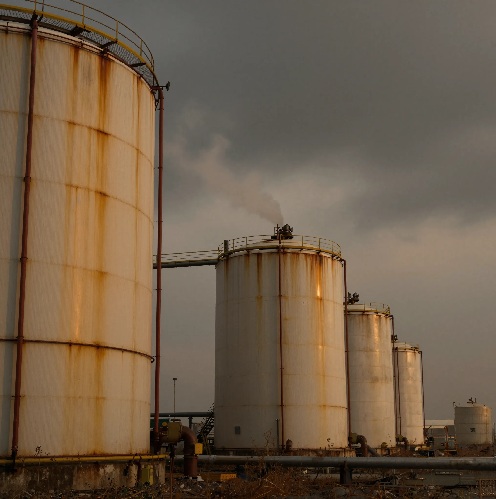
In the global energy sector, the long-term implications will be structural rather than cyclical. South America will remain one of the world’s most resource-rich regions, but future production growth will depend on political alignment, regulatory clarity, and sustained reinvestment in aging infrastructure. Energy markets will begin to price optionality around whether large reserve bases can be reactivated and integrated into global supply chains. While near-term volumes are unlikely to materially alter global balances, expectations of future access will influence refinery planning, long-term offtake agreements, and cross-regional trade flows. Energy companies, service providers, and commodity traders will increasingly position around potential re-entry scenarios, while remaining cautious about timelines, capital requirements, and execution risk. Over time, supply reliability rather than reserve size will become the primary determinant of strategic value.
Capital Reallocation and Global Energy Security Trends
Geopolitical uncertainty in South America will accelerate a broader reallocation of capital across the global energy system. International producers will continue shifting investment toward politically stable basins and short-cycle assets, while reducing exposure to jurisdictions where long-term project economics remain contingent on governance outcomes. Energy-importing nations will deepen diversification strategies, securing alternative supply across multiple regions and expanding investment in liquefied natural gas, renewables, grid modernization, and energy storage. This environment will further position the energy transition not only as a climate strategy but as a geopolitical hedge, with capital increasingly favoring systems that minimize exposure to politically fragile supply chains. Over the coming decade, energy security will be treated as a core financial variable rather than a secondary policy concern.
How Global M&A Strategy Will Evolve
The impact on global mergers and acquisitions will become increasingly pronounced. Cross-border deal activity involving energy, infrastructure, and resource assets will be filtered through more rigorous political-risk assessments, with strategic buyers prioritizing jurisdictions offering regulatory predictability, enforceable contracts, and stable fiscal regimes. Transactions that would previously have been evaluated primarily on operational synergies and valuation metrics will be stress-tested against scenarios involving policy reversals, contract renegotiation, and restrictions on capital movement. As a result, overall deal volumes in politically exposed regions will likely remain constrained, while valuation gaps between low-risk and high-risk markets will widen. Global M&A will become less about geographic expansion and more about risk-adjusted resilience.
The Road Ahead
Looking beyond 2026, geopolitical uncertainty in South America will continue to shape global capital allocation in profound and lasting ways. Investors are likely to increasingly embed political and regulatory risk into discount rates, financing structures, and portfolio strategies, reinforcing a long-term shift toward diversification, optionality, and disciplined capital deployment. In energy markets, this will manifest as sustained volatility, a premium on supply reliability over sheer reserve size, and ongoing momentum toward diversified and low-carbon energy systems. For M&A, the gap between strategic consolidation in stable markets and opportunistic investment in high-uncertainty environments will widen, redefining deal flows, valuation benchmarks, and risk-adjusted return expectations. Over the longer horizon, any stabilization that strengthens governance and restores investor confidence could unlock substantial reinvestment in energy, infrastructure, and natural resources, with the potential to reshape global supply chains. Until such conditions are realized, political stability will remain as critical to asset valuation as operational performance or commodity fundamentals, ensuring that geopolitics continues to influence global energy strategy and cross-border M&A for years to come.